

 Català
 Español
 English GB
 Italiano
 Français CA
 Deutsch
 Español MX
 Français
Happy Thanksgiving!
Happy Thanksgiving to you. And how are you?
Good. Good. Enjoying the day. So nice to be talking to you today. Thanks for having me.
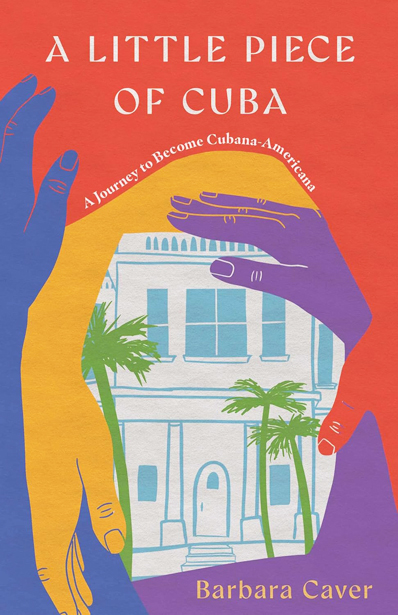
For sure. So I was sent your information by Lydia Rasmussen with Smith Publicity, to feature your recipes from the new book that you have entitled-"A Little Piece of Cuba: A Journey to Become Cubana-Americana ". I see that you are quite a professional in both writing and production. Let's get started with how you were motivated to write the book, your history and your love for travel.
Definitely, so the book comes out December the 2nd and it's a travel memoir about a trip that I took to Cuba. Gosh, it's been almost eight years, actually over eight years now since I went. I decided to go to Cuba because my mother was born there and I grew up very close with my mother's side of the family, with the Cuban side of the family which has deep roots in Cuba.
My father is from South Carolina where I grew up, pretty disconnected from my Cuban heritage even though we were really close with my mother's side of the family. I don't speak Spanish and was always very curious about it. I'm very curious about Cuba and what it meant.
We didn't really talk about it very much when I was growing up and then when I moved to New York for college, which is where I have stayed and where I live now, I started meeting other Cubans and other walks of life and learning that there was a lot to learn about Cuba and a lot to learn about myself. So the trip to Cuba really kicked off sort of a reinvention of myself as Cuban-American and then sort of a reconnection to my Cuban heritage. That's really what the book's about and one of the ways I really connected with Cuba and have really connected with cultures everywhere that I've traveled is through food.
One of the first things I did when I got back from Cuba was figure out these recipes myself; the two things that I really like, sangria and pan de media noche-which is a specific type of Cuban bread. When I was in Cuba, I learned that there's many different ways to make the bread and many different styles. So I kind of figured out a way to make it my own, in my apartment in Queens with my own bread machine.
Okay, now when you mentioned that you really didn't talk about being from Cuba, what do you mean by that? Was it just not something that came up or was it something else? I mean, Cuba and America have always had this sort of interesting relationship. I'm just kind of curious, before we get into the recipe part, what was behind not really talking about it that much?
I think it was more of just it wasn't something we felt like we needed to highlight. You know, it was sort of like, so my name is Carmelina Barbara Caver. That's my complete name. Carmelina is my grandmother's name from Cuba. And I go by Barbara, I always have. I would get questions, you know, when I was a young child. It's actually a scene I describe in the book. As early as kindergarten, the teacher would be looking at the role of the students and be like, oh, Carma... and I'd respond, you can call me Barbara. That was how it always happened. Sort of like, oh, my God, what is this name? And then occasionally there would be polite conversations around, oh, why don't you go by Carmelina?
Well as a child, they never called me Carmelina. They always called me Barbara. So I felt like I was carrying a Cuban flag my whole life long before I ever really visited the island. Back then it was more along the lines of, oh you're Cuban, that's nice. And it wasn't until I moved to New York when it was, well, tell me your story. And I thought, I didn't really have a story and decided then to write that story for myself. That's really kind of how it evolved.
You know, it's interesting. Environment is everything. I can understand being from where you were, and then when you get to New York, it's a different. I won't say cachet, but it's just more Latino, more so. I like Carmelina, it's a very pretty name. I would assume if you had been in New York when you were born, it wouldn't have been much of an issue. I mean, maybe, maybe not, but in terms of the name, you may have been known as Carmelina instead of Barbara if you were born in New York-without even thinking twice about it.
I completely agree with you. I think even having been in a different part of the country, not necessarily New York. I grew up in Columbia, South Carolina and think if I had lived in Atlanta even, I think it would have been a different experience. Barbara is my father's mother's name. So Barbara, it was sort of like, well, you live in the South, let's connect you to the Southern name.
And the great irony in all of this is that Barbara is a very Cuban name. I have lots of Cuban relatives named Barbara and one of the funny stories, and I think you can appreciate this with your connection to New York, when I would introduce myself as Barbara, there were people who instantly asked me, so where is your family from originally? And I say-my dad he's originally from South Carolina and my mom grew up pretty much in Louisiana-but she's originally from Cuba, and people would latch onto that.
My grandmother is Barbara. You know, that was a cue, that was the name. And so here we were thinking, which is funny, let's not call you Carmelina-because that's the Cuban name. Nobody can pronounce it. It's an unfamiliar name. We'll just use the very familiar name. Well, that very familiar name I later discovered, Barbara, is also very Cuban.
I never thought I would ask you about it because it's a nice name.
Yes, it is a great name. And my grandmother, Carmelina, you know, she's gone by Carmelina her whole life. No one had to change her name. She's lived all over the United States. She never had to go by a nickname, you know, none of it. So it's interesting.
This trip that you took eight years ago, what prompted you to finally do it? And what was it like? How long were you there?
What prompted me to finally take the trip was actually because a lot of people that I had known, had gone to Cuba casually as a tourist. This was during when the Obama administration loosened up some of the travel restrictions due to the embargo. So you could you know, just hop on a flight to Havana from New York. You can still go now, but you've got to show up with your visa locked in. Now, you've got to have everything buttoned up, at that time you didn't you could just go. And it was much more like, any trip to anywhere in the Caribbean.
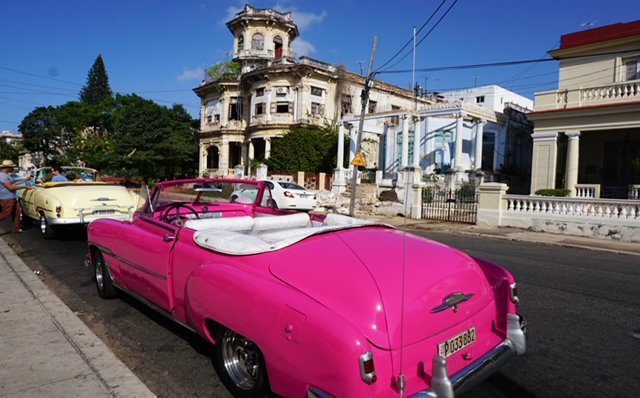
What was happening, I was meeting people, very casual acquaintances who were telling me, oh, yeah, you're Cuban. Well guess what... I just went! And, one day I rode around in a car and I had like drank a bunch of mojitos, and honestly, Eric, I got angry. I was like, wait a second...my family exiled themselves from the country. And you know what? I don't speak Spanish because of this difficulty in connecting with Cuba. You know, there's a lot of there's a lot of water under the bridge with Cuba and with my family specifically.
And here they were(my acquaintances) acting like it's any old place, just taking a bunch of pictures and they went there on a cruise ship. And my my family can't go back...they're considered enemies of the state, you know, and you're just flipping around, going and hanging out like it's Puerto Rico, like it's, you know, any vacation. So I was like, oh, it's not a vacation and I'm going to go and I'm going to prove it to you that it's not like any other place.
But I think I kind of felt dared to go. I also felt like it was the one thing that would tell me, it would really tell me whether I was Cuban or not. It's like if I go and it just feels like any other place that I've ever been, if it feels like a place I'm excited to be there and glad I went but not really feeling any sort of soulful connection to it. Then that'll tell me something. And the opposite happened.
I went there and I felt like I had come home, even without speaking the language. It's something I described very early on in the book. As soon as we got off the airplane, it was like the cracks in the tarmac on the runway looked familiar to me. There was very much a strong sort of mystical connection to Cuba and the food, the minute we sat down and had our first lunch, actually it's funny. The first thing we ate in Cuba was ice cream and it tasted like homemade ice cream that connected me to childhood. Not only like a childhood memory from Cuba, but from the South too. It's like you get these connections. It's not like this thing you're gonna just go to Ben and Jerry's and get a scoop of ice cream. So I felt very, very connected to Cuba and I was only there for five days. It's one of the places, actually the only place I've ever been to that I remember with all five senses. You know, when I think I look at pictures that I took when I was there and I was like, oh, I remember the smell of that restaurant. That restaurant was cooking something that day and I can smell it. So it's very much like a whole body experience going there, and of all the places that i've traveled it's the one that sticks with me the most and I was only there for five days-so it was really important.
Were there any things that made that experience challenging, like technology-wise, being able to book hotels, anything that made it feel uncomfortable-just logistically for someone who would travel to Cuba? Was there anything that was challenging more so than it may have been, say, if you went to Puerto Rico or you went to Cancun, just in terms of getting around?
Definitely. Cuba logistically is challenging and that's pretty much where for me, the, the logistics ended. As an American, your cell phone won't work. Credit cards aren't accepted. You can take American dollars, but you're charged a very heavy levy beyond the exchange rate. We had to plan ahead and make sure that all of our accommodations were booked in advance. We stayed at an Airbnb, and now there's a lot of restrictions around that. You can't just go book an Airbnb through the usual website through the app. We could at the time, so those kinds of things, made it easier and same with the plane ticket. We were able to book the plane ticket in advance. As long as we had a day that we were leaving, they were like, okay, great, good, have a good time. I think going with an open-ended ticket, was allowed, and I certainly don't think it would be allowed now.
It's not like going to Puerto Rico and Cancun, with some planning you can bring a little, little bit of cash on hand, but mostly just credit card, cell phone and everything's fine-everything will work and you don't think twice.
Cuba requires you to think twice and really kind of plan ahead, which I think a lot of people, unless you're my age or older, you don't think about anymore, you know. But that was where the logistics really kind of ended. It was sort of like that was where the complications and the difficulties kind of ended, at least for me. It's easy to get around. It was relatively even easy to communicate. Not many people speak English, but I could understand because it was the kind of Spanish I had heard my whole life, even with sort of like elementary school Spanish. Google Translate wasn't an option, so I was asking for directions using the Spanish that I learned when I was maybe five or six years old, but got it across. I mean, the people were so helpful, helping me with where I needed to go; drawing maps, making sure we felt very comfortable and very, very secure. So once we got there, it was easy. It's just the planning of the logistics. That's a level of complication that I think people have to be prepared for.
After you got back, how soon did the inspiration to write the book come and how did that evolve?
I knew I had a story to tell as soon as I got back. How I was going to tell it, I let it simmer. And what the story was going to be definitely needed to simmer. Then when the pandemic hit, I was provided with an opportunity of more time. It started as sort of essay collections that I was going to self-publish.
I had also been thinking about trying to tell a story about Cuba my entire life. I was like, you know, I really want to figure out what I had. I'd written a few things as a hobby. And it was when the pandemic hit that I was like, okay, now I can focus on this as a creative project. How do I want to do it? Then it was, well, if I'm writing essays, you know, then I can write a book.
One thing led to another. I found an editor and book coach who kind of helped provide a structure and a framework that I followed and this got me to the first draft. And then I went from there.
So the recipes, now I see the Carmelina Sangria and the Barbara Pan de Media Noche. Pan de Media Noche? Is that media as in…images as in film or is media another word?
Media noche actually means midnight. Pan de noche, is midnight bread.
Well, let's talk about the sangria first and then the pan de media noche. What are the ingredients that you can use? Is it something you could tell me I could mix on my own or I need to get a copy of it in exact measurements?
For the Sangria, definitely it's choose your own adventure. The recipe is a framework. Definitely you want to start with a good Spanish red wine, something like a Spanish table wine-Rioja, something like that. Sangria, of course, is related to the word sangre in Spanish which is blood. I like to think of it as red, and I like to think of it as something that really connects to you on kind of a visceral level. Something that you're going to be able to sip that's rich and hearty, but that's also fruity, light and fun. That's what you get in the lemons, the Sprite for a little fizz and pop. And if you want to get creative use sparkling red wines have hit the market in recent years. I haven't tried it yet with a sparkling red wine, but I definitely think that's something I would do at some point. And again, because of the tropical connection, I like to use a lot of lime and orange that also kind of connects to Spain, the southern part of Spain where my family originated from a very long time ago. Where they grow a lot of oranges, Sevilla oranges-which are sort of a sour orange, where take an orange and lime and mix it together.
Carmelina’s Sangria
Ingredients:
1 bottle (750ml) of Spanish rioja wine
½ cup of brandy or rum
1 cup of Sprite or seltzer or club soda
2 lemons, juiced
1 tablespoon of sugar
1 lime, juiced
Orange and lemon slices for garnish
Instructions: Mix all ingredients together. Feel free to leave in the pulp from the juiced lemons and lime. Chill in the refrigerator for an hour before serving, or serve over ice.
So that's kind of where I came up with that recipe. And I tell you, when I was in Cuba, there was a place there that served a sangria that tasted exactly like the sangria my grandmother used to make when we would go to the beach. It was so potent that I actually thought my grandmother may have actually visited there-written the recipe down, given it to a friend of hers-it got lost, they found it and now they make it just as good. This is how I've been making sangria for a long time, since before I went to Cuba.
So this is something you fine tuned after your trip?
Yes, it's something I fine tuned. The thing that I had been missing was the fizzy component, which is why you've got to use Sprite or a seltzer-it just depends on how sweet you want to make it.
Now, the Pan de Media Noche?
Pan de media noche, that was something that I challenged myself to figure out after we got back. I remember having pan de media noche at my grandmother's house when I was a child, she used it to make Cuban sandwiches. When I moved to New York I started going into into different bakeries, Latin and Hispanic bakeries around New York, asking about Pan de media noche. And every single time it did not look or taste like what I remembered. They were like, sure, we have that...this is it. And it wasn't what I remembered. I remembered something sweet and eggy and yellow.
And when I get to Cuba it's one of the first things I see on the menus at the Paladars in Cuba. (As a side note, they're called Paladar's- because they are basically run out of people's homes-so there may or may not be a menu. It's like home cooking with home chefs.) One place I visited happened to have a printed menu and it talked it featured Pan de media noche and Cuban sandwiches. So I was like, give me one of those and let's see what happens. What came out was a very yellow bread. It was sweet. And you could defintely tell there were eggs in it and I was like, this is what I remember.
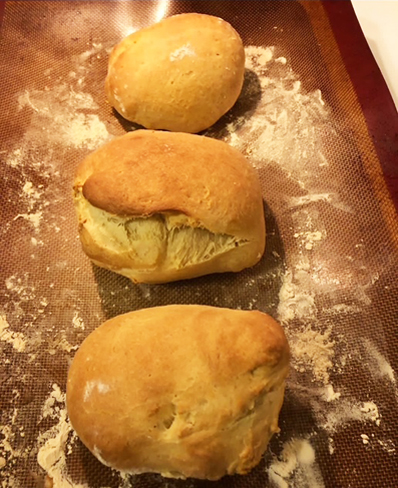
When I got back, I had saturated myself on pan de media Noche while in Cuba. I think I was a walking loaf of bread by the time I got back and it was great. Motivated, I started my research and when I started to really look up Cuban pan de noche specifically, that's when I discovered that lard is a big component, which helps make it, probably terribly unhealthy but really delicious. And eggs, they use a lot of eggs, and a lot of sugar. That's what gives it the consistency-that keeps it strong enough to use as a sandwich bread or light enough to eat by itself.
I worked pretty hard to figure out the right measurements-and I then use a bread machine. It's a total cheat because the bread machine then makes it-it has a general dough setting. The bread machine apparently gives it the right combination of rising and resting that you need. It also controls the humidity environment a bit more. I mean, I live in an apartment in Queens, and it's an old apartment-so when that radiator steam heat kicks up, my bread is going to collapse otherwise, and I may or may not have control over that. The bread machine helps me control all of the yeast and keeps the temperature under control so that the product is more consistent.
Barbara’s Pan de media noche
Ingredients:
½ cup of melted lard
4 eggs, beaten with a strong arm
½ cup of white sugar
1 tablespoon of kosher salt
3 cups of bread flour
2 packets of active dry yeast
3 tablespoons of sugar (to proof the yeast; omit if using the bread machine)
½ cup of warm water (to proof the yeast; omit if using the bread machine)
1 egg, whisked for the egg wash (not for the recipe but to make the rolls shiny during baking)
Instructions: Shape the dough into rolls, place the rolls on the parchment paper, and brush an egg wash over the rolls. Bake at 350 degrees for 30-35 minutes, or until the bread sounds hollow when thumped. This makes 4-6 sandwich rolls depending on how large or small you shape the rolls.
You mentioned lard. Lard over butter?
Yes, lard over butter. It does make a difference because butter has the milk component to it. Butter's got that creaminess to it that you don't want in this bread. You don't want it to go to the creamy side of things. You want the fat and you could get a bit of bacony taste that sometimes that comes through with lard. You want something that's savory, not too sweet, not too creamy and balanced enough for sandwiches or stand alone.
Do you have the intensity to be a chef or were you always a good cook or is this something you just picked up?
Something I picked up. I like to cook. Probably because so much of my life revolves around screens and writing I enjoy the physicality of cooking-of chopping an onion, I like the physical nature of it. I've always just been, very much like a home chef. I like my kitchen. I like my tools. I don't like to bring things to other people's houses. I like to play around and experiment. And Thanksgiving at home is always fun because we get to do our own thing and everything turns out great.
With the book you've written, is this something that you could easily visualize? Do you have any ambitions of making it something in a video presentation or some way to experience it like that?
That's a great question. My gut instinct right now is to say no. Because, it's very much an internal experience of what I felt while I was there. Also, while I was there, I took a ton of photos that I've been releasing on social media and on the website and things like that. Of course, they're eight years old and you got to edit them sometimes. I don't think to try to put it into any other format right now, I think the story as it needs to be told is in the best format for now.